Low Maintenance Yard: What Works and What Backfires
Plan a low maintenance yard with less mowing and weeding, and learn where gravel, mulch, clover, and ground covers work best and what upkeep each one needs.
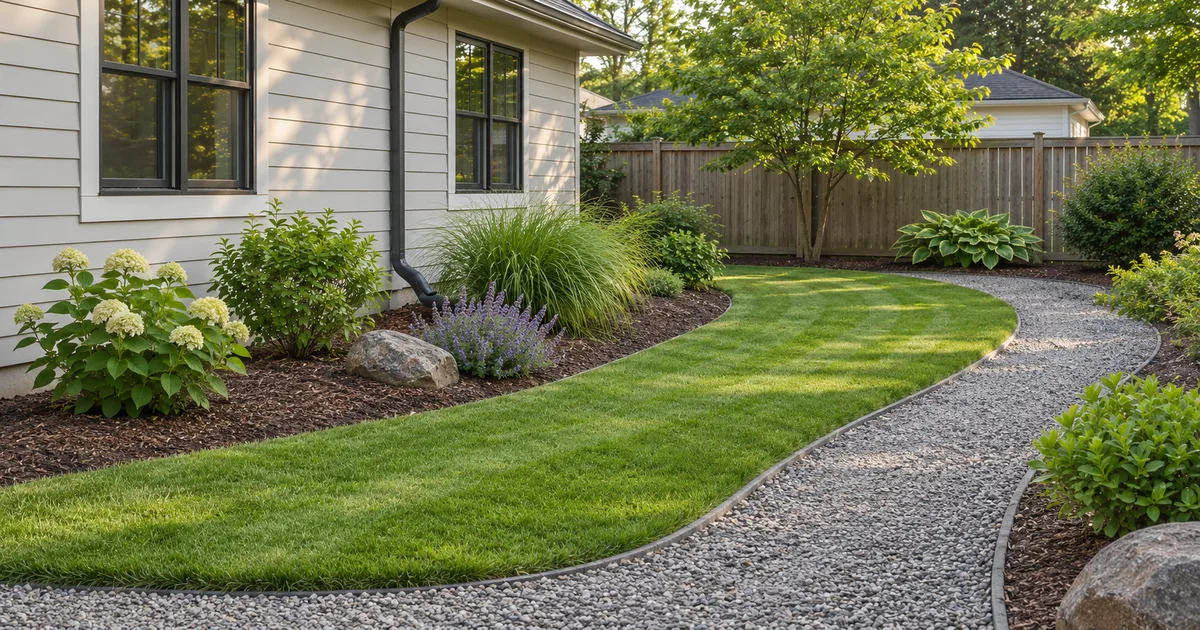
You buy a house with a backyard full of stone. By fall, leaves lodge between the rocks, weeds pop up along the fence, and the dog has worn a route from the back door to the gate. A low maintenance yard takes fewer recurring chores, and you can schedule most of them. Start by matching the cover to how you use each part of the yard. Keep a surface you can walk and play on, use stone where it earns its keep, and cover exposed soil in beds.
What does a low maintenance yard really mean?
Every yard needs some care. For low maintenance landscaping, pick the jobs you can keep up with. A small lawn needs mowing when it’s growing. A wood-chip bed needs occasional weeding and a fresh layer as the chips break down. A gravel path needs leaves cleared before they turn into a rooting layer. Seeds arrive on the wind and with birds, so even a freshly covered bed will get seedlings. Keeping soil covered gives them fewer places to take hold.
Walk the yard after rain and again on a hot afternoon. Mark the grocery route, the play area, the dog’s run, and anywhere water pools. Deal with standing water and runoff before bringing in mulch or gravel. When you plan your new yard, keep the surfaces that already suit their spots and circle the places you’re repeatedly mowing, pulling weeds, or sweeping debris.
Choose one cover for each patch. Leave mowable turf where you need a durable play surface, put a path on a route that gets daily traffic, and use planted beds or ground covers in areas you seldom cross. Look at these simple yard layouts if you’re deciding where the edges should go. Straightforward edges make it easier to mow the lawn or rake the path without disturbing the next surface.
Does a gravel or rock yard stay weed free?
No. Dust and leaf litter collect between stones. Once that layer can hold moisture, windblown seeds can germinate above the original soil. If you’re dealing with gravel yard weeds now, rake out the leaves and pull young weeds when the debris is damp. Wait until plants have grown into the base and you may pull up a handful of stone with each root.
Loose stone makes for awkward footing when you’re barefoot and gives you a rough place to kneel. Dog waste can lodge between the pieces, and exposed stone can get hot in direct sun. In a yard that’s already all rock, start with the stretch from the door to the play area. Give it a firm walking surface and reclaim a small patch for grass or a grass-clover mix where you want to sit or play. A mixed lawn fits lighter use. Give a dog’s repeated running route a surface you can repair and clean.
Keep gravel where you like the footing and can clear debris, such as a short path or a sunny, dry planting bed. Choose plants that can take the reflected heat and fast drainage in a gravel garden. Try drought-resistant planting ideas where water is scarce, and check how the soil drains before adding rock.
If you rent, ask the landlord in writing before removing stone, changing the lawn, or installing a path. You’re paying for work you’ll likely leave behind. If loose stone makes an entrance hard to use, document the spot and ask about a firmer route. Check your lease for maintenance and changes. Responsibility for an injury is a separate legal question.
Does weed barrier fabric work?
An intact barrier can block some growth from below. Colorado State University Extension points out what happens above it. Dust and leaves collect over woven fabric or plastic and give new seeds a place to grow. Roots can take hold in the weave, seams, or planting holes. When you pull established weeds or try to lift old fabric from under rock, it can come up in shreds.
Skip fabric in a planted bed you expect to divide, replant, or expand. Use organic mulch and spot-weed it. On a light-use stone area over firm soil, you can also skip a separator and accept that you may need to top up stone as it works into the soil. If you’re building a gravel path or patio base over soil that could work its way up into the aggregate, use a geotextile specified for separation. A roll sold as garden weed barrier may lack the strength or permeability the base needs. The same principle applies to a gravel drainage trench, with a filter fabric suited to the soil and the drainage design.
Use geotextile where you need to keep soil and stone apart. Expect to weed anything that collects soil on top.
Under a deck with no planting, a permeable separator can keep a gravel layer from mixing with the soil. Clear the debris you can reach and keep drainage open. Skip solid plastic where water needs to soak in. Keep a weed torch away from plastic or woven synthetic fabric. Heat can melt it, and dry debris can catch fire. Pull those weeds by hand.
How thick should mulch be?
Mississippi State University Extension recommends 2 to 4 inches for chipped or shredded wood. In an established bed, use the shallow end for finer material that can mat. Coarser chips can go on deeper. Check the mulch depth with a trowel before you top up an old bed. Add enough to restore the layer. Pull chips away from stems and tree trunks and leave the root flare visible. Mulch piled against bark holds moisture where you don’t want it.
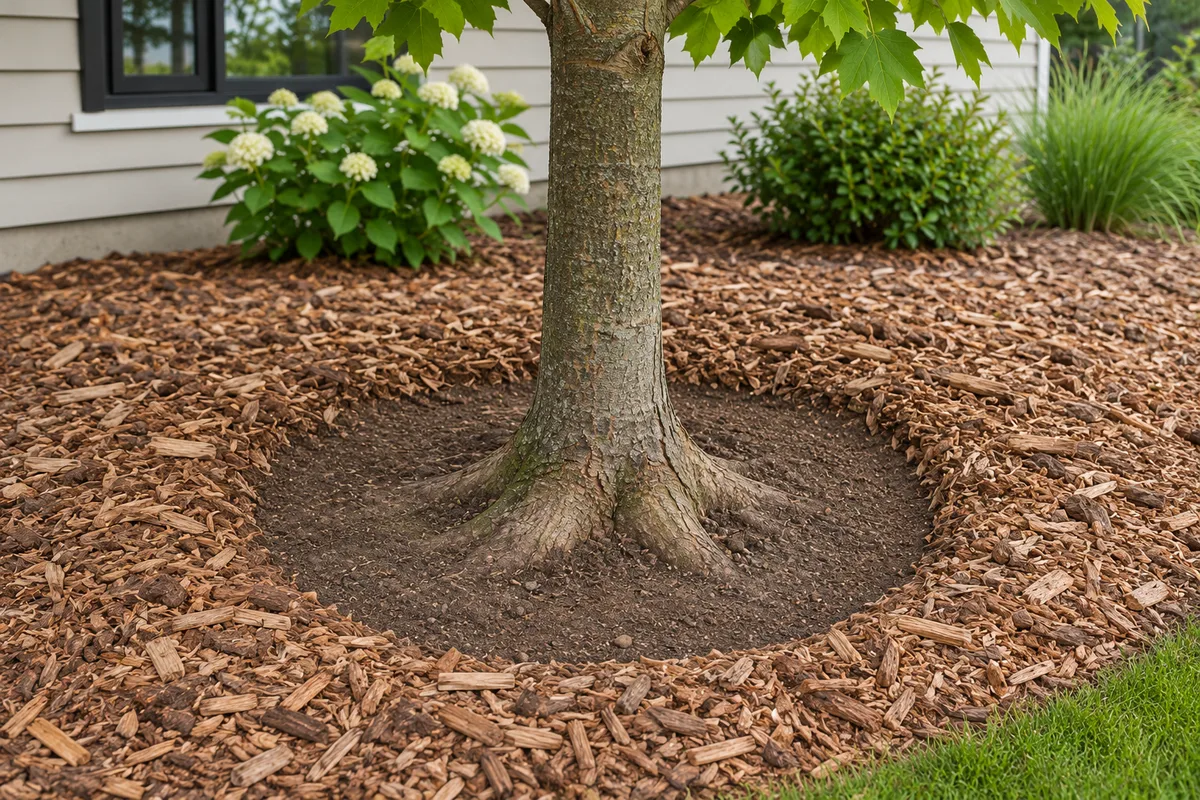
To turn a slice of lawn into a bed without digging out all the sod, mow it short. Peel tape and labels off plain cardboard, soak it, and overlap the sheets so grass has fewer gaps to grow through. Cover the sheets with organic mulch. Aggressive spreading grasses and perennial weeds can come up at the edges or find a gap, so expect follow-up pulling.
The cardboard is there to help smother the sod. It breaks down over the following months, at a rate that varies with moisture and site conditions. The mulch is what keeps the soil covered afterward. Check the layer each year and replenish where it has thinned. Oregon State University Extension cautions that cardboard can restrict water and air movement. Around established trees, spread wood chips directly on the soil.
What can replace a high-maintenance lawn?
A clover lawn makes sense where you want a short, green surface for light use. White clover works with soil bacteria to fix nitrogen and can reduce fertilizer needs in a grass mix. Give seed contact with soil. Seed scattered over thick grass or thatch has trouble establishing. Keep the seedbed moist through germination. Clover will still get weeds, and repeated running or digging can expose soil. Keep grass in the mix for a more durable surface. University of Maine Cooperative Extension also notes that clover can be slippery when wet.
If you mainly need to cross the yard, mow paths through a meadow-style planting. Follow the routes you already take to the gate, hose, or compost pile. Try leaving a small patch of mixed grass and clover taller, removing any invasive plants you find. If you’re sowing a native meadow, expect to clear stones where they’re in the way, prep the seedbed, and water as needed while seedlings establish. University of Delaware Cooperative Extension recommends mowing a seeded meadow higher during its first season to check weeds. Plan for occasional cuts after establishment and check local weed ordinances and HOA rules before you let the planting grow tall.
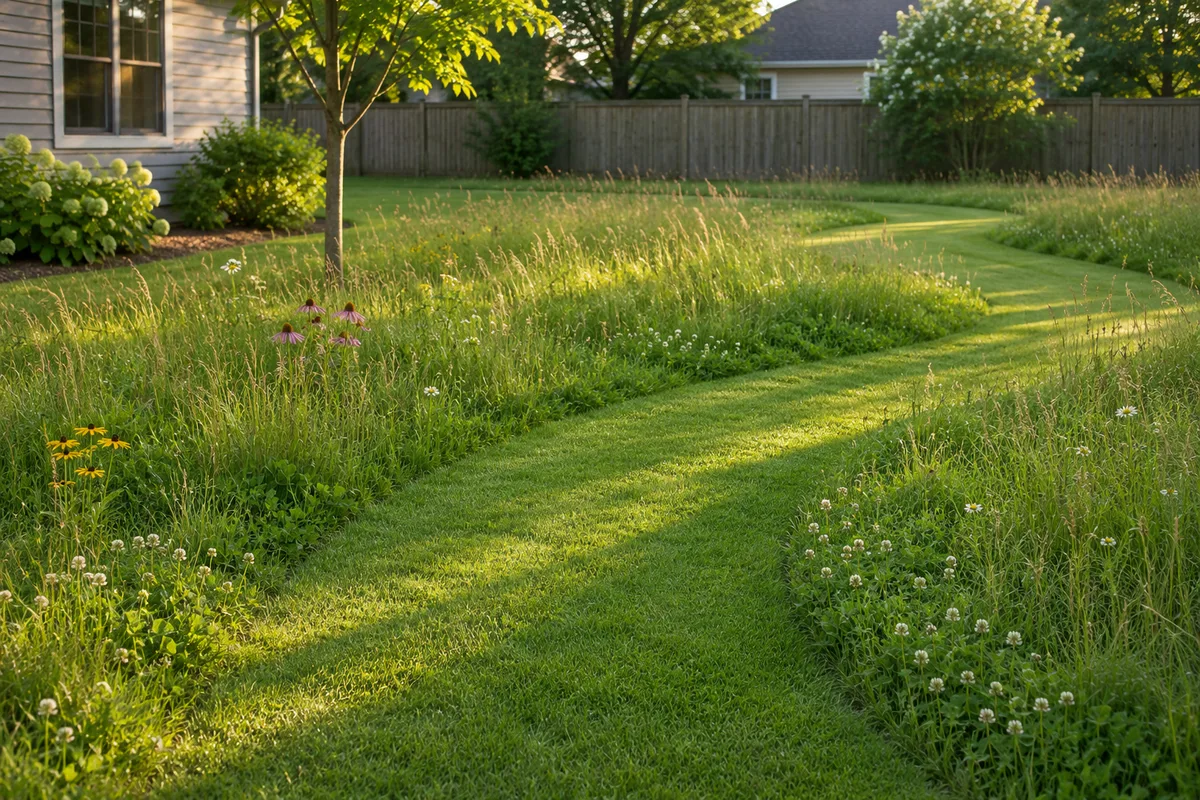
Keep paths clear of overhanging growth and keep play in the sunny, short-cut part of the yard if ticks are a concern. Ticks favor shady, brushy edges and tall vegetation. A short path can make it easier to avoid brushing against that growth.
If you want a ground cover instead of grass in a spot you seldom cross, match it to sun, drainage, and your USDA plant hardiness zone. Try Pennsylvania sedge in dry shade within its eastern native range or creeping thyme in sunny, well-drained spots with only occasional steps. Give plants room to fill in, and weed the gaps while they establish. Put stepping stones where you walk regularly. Start with native planting ideas for the spots where a regional species suits the soil and light.
Put your mowing time where you spend time. A short route to the gate can be all the lawn you need to cross the yard.
Artificial turf trades mowing for cleaning. Penn State turf research has measured hotter surfaces on synthetic turf than on living grass in direct sun. University of Florida IFAS Extension also flags dog urine odor, particularly where the base drains poorly. Pull seedlings that appear in infill or at edges, remove leaves, and brush and redistribute infill as the installer directs. If you choose it, start with a small, well-drained area you can rinse and groom. Keep it clear of established tree root zones.
How do you take over a weedy yard on a budget?
Start by stopping seed set. Mow the areas you want to keep as lawn, using the upper end of the recommended mowing height for your grass species. Cut often enough during active growth to avoid taking off more than a third of the blade. Pull plants with mature seed heads before mowing so you don’t scatter them. Frequent cuts reduce seed production for some weeds. A dandelion can send up another flower stalk from its taproot after you mow. Use a weeding fork to lift it from moist soil.
For a daily routine, try setting a 20-minute timer. Work one patch at a time after rain or deep watering, while the soil is still damp. Start by the back door and move outward in the same order. Recheck cleared spots for regrowth before adding the next strip. Once you can see how much lawn is worth saving, use this guide to planning a yard layout to decide which patches to keep and which to turn into beds.
Overseed thin cool-season turf in late summer or early fall. Rake away dead material and get the seed against soil. If thatch still keeps seed off the soil, use a slit seeder or core aerator. Keep it moist during establishment. In a warm-season lawn, check your local extension’s planting window for the species. For a future bed, use cardboard and mulch or block light with an opaque tarp, and secure the edges. Give the tarp several weeks, then lift a corner to check for living growth before you remove it. Pull any regrowth. Some perennial roots survive under cover.
If you want to avoid herbicides, keep working in small sections until you can pull regrowth as it appears. If you choose to spot-treat, identify the weed and use a product labeled for the site and the weed. Follow label directions, including when pets can return. Check whether the treatment will also kill clover you want to keep. UConn Extension explains that household vinegar can burn leaves while leaving established roots alive. Keep salt off the soil. It can injure nearby plants and make the patch hard to replant, especially where poor drainage keeps it from washing out.
How much maintenance does each option take?
Compare the tasks you’ll repeat once the surface is established.
| Surface | Regular tasks | Where weeds show up | Heat | Dogs |
|---|---|---|---|---|
| Gravel | Clear leaves, rake displaced stone, top up thin spots. | In trapped debris and along edges. | Exposed stone gets hot in sun. | Loose pieces can make waste hard to pick up. |
| Mulched beds | Pull seedlings and replenish mulch as it breaks down. | In thin patches and on aging mulch. | Mulch shades the soil. | Running scatters mulch and wears plants. |
| Clover mix | Mow to the height you want and reseed worn patches. | In gaps from wear or poor establishment. | Leaves shade the soil where the mix is dense. | Light use fits better than repeated running or digging. |
| Turf grass | Mow during growth, water as needed, repair wear. | Where turf thins or soil gets compacted. | Living grass stays cooler than synthetic turf in sun. | Can take play but may need repairs at gates and along fences. |
| Ground cover | Weed while plants fill in and trim spreading edges where needed. | Between new plants and in bare spots. | Leaves shade soil once plants fill in. | Give dogs a route around beds. |
| Artificial turf | Remove waste and leaves, rinse, brush, and maintain infill. | In debris, infill, and edges. | Can get hot in direct sun. | Odor control depends on cleanup and drainage. |
Before you buy a surface, check the job you’ll do after the leaves fall or the dog wears a path through it.
FAQ
Is gravel cheaper than grass long term?
It depends on the site and what’s already there. Compare the cost of removing sod, preparing the base, edging, and buying and delivering stone with the cost of improving or keeping your lawn. Add the recurring jobs you pay for or do yourself. Gravel can cut mowing and irrigation on a dry strip. Under leaf-dropping trees, budget time to clear debris and weed. Keeping a small, healthy lawn can cost less than replacing it.
Can you use landscape fabric under mulch?
You can, but skip it under organic mulch in a planted bed you plan to maintain and replant. Seeds can sprout in the decomposed mulch, and their roots can catch in the fabric. Maintain the mulch layer and pull seedlings while they’re small.
Is clover a good lawn for dogs?
A grass-clover mix can work for a dog that wanders through the lawn. If yours follows the same fence line every day or digs at the gate, plan on worn patches. Set up a separate route or use a repairable patch of grass where play is concentrated.
What is the lowest-maintenance ground cover?
Choose one that fits your light, moisture, winter temperatures, and traffic. A sedge suited to dry shade can spare you repeated attempts to fill in sparse grass under trees. For a sunny slope, ask your local extension office which plants will cover the soil without becoming invasive where you live. Try your choice in one patch you can weed and water while it fills in.