New Construction Landscaping: Fix the Yard Before You Plant
New construction landscaping goes wrong because of compacted fill and missing topsoil. Fix the soil, grading and lines first, then plant. Step-by-step guide.
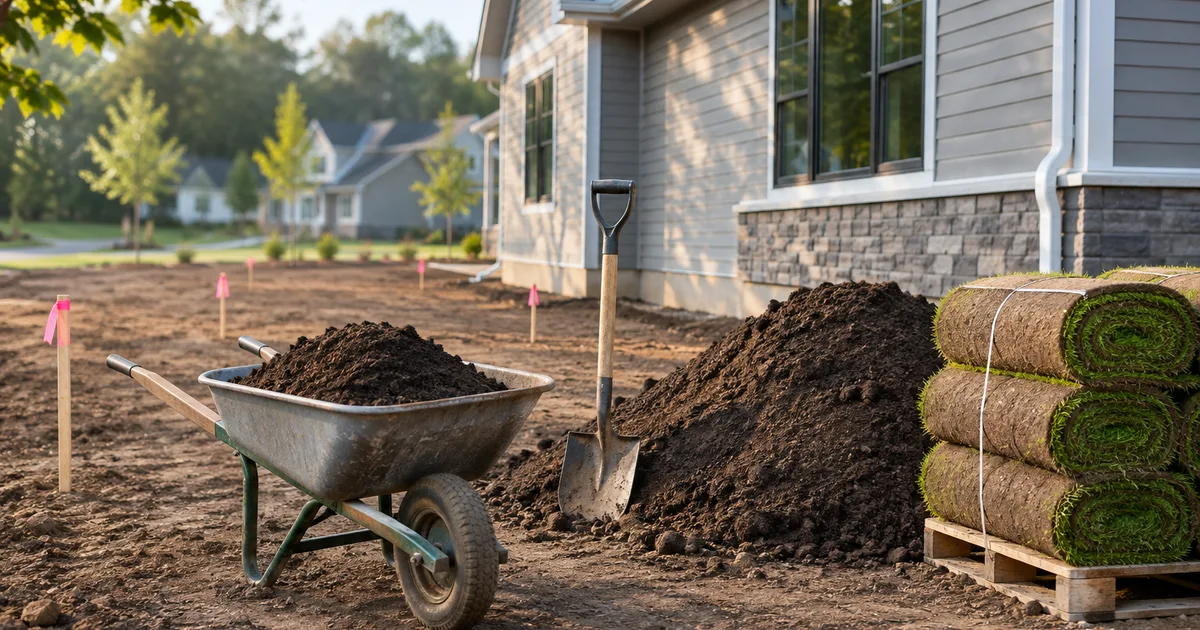
New construction landscaping starts below the lawn. Before you buy trees or schedule a patio, check where rain goes, locate buried lines, and find out what is under the surface. A new build landscaping plan that puts drainage and soil first can save you from tearing out fresh sod or planting beds to fix them later.
Why does new construction landscaping fail so often?
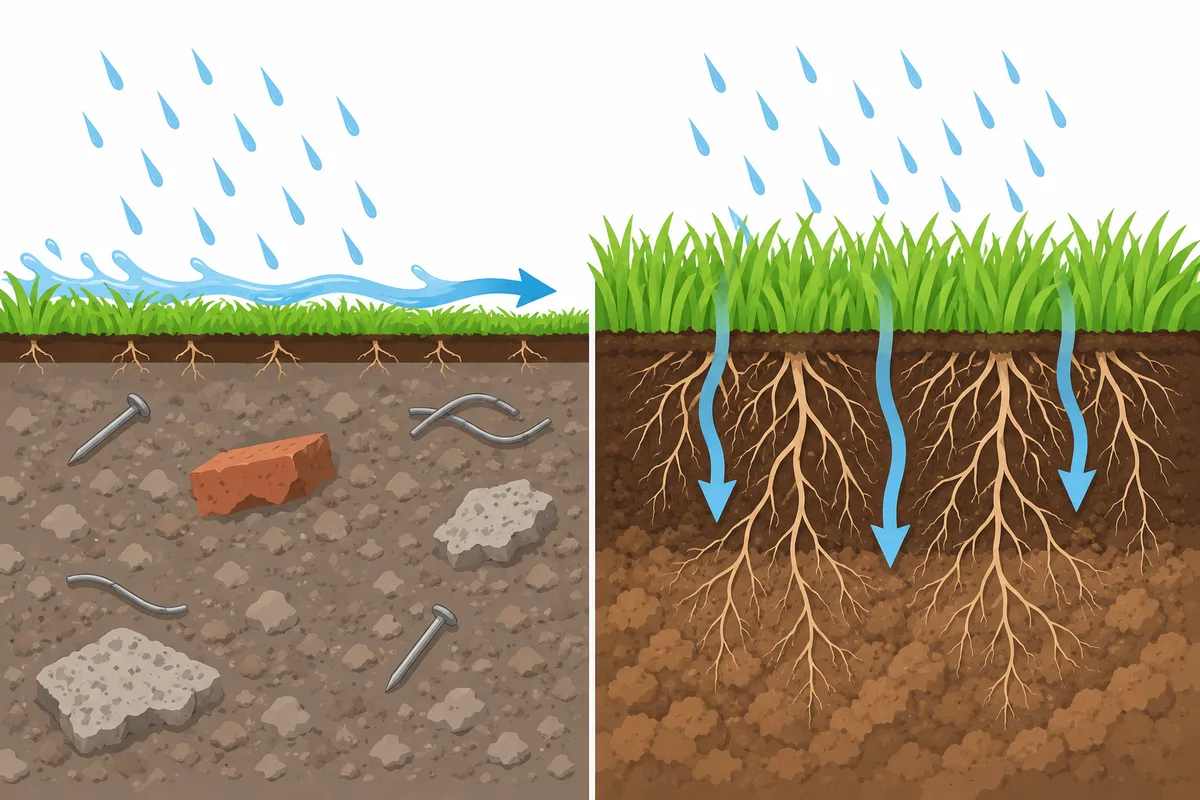
You move in and the sod looks green. A few weeks later, patches brown even though you water them. Lift a corner and you may find shallow roots above dense fill. Compaction squeezes the spaces that carry air and water through soil, so roots struggle and water can run off instead of soaking in. Drying, poor installation, and other problems can also cause brown patches, so check before blaming the soil alone.
Construction commonly removes topsoil, and equipment and foot traffic compact the remaining ground. Some lots receive useful soil back; others have only a thin surface layer. You may also find stones, wire, scraps of concrete, or other debris. A lawn laid over gravel or hard fill can look finished before its roots have a workable place to grow.
Start with an inspection, not a delivery of plants. Photograph the yard after rain and keep the builder's grading plan, warranty, and landscape documents together. If water collects against the foundation or a swale appears blocked, raise it with the builder before changing the grade yourself.
What did the builder actually leave in your yard?
Builder grade landscaping can mean anything from bare soil to a finished lawn with trees and irrigation. Your contract and site plan tell you what was promised; a spade tells you what is there. Once the lines are located, dig small test spots across the future lawn and beds. Look at the depth of the darker surface soil, how easily the spade enters, and whether you hit rubble or a sharp change in soil. Soil color alone doesn't prove that a layer is good topsoil.
Check low spots, equipment routes, and downspout outlets. Sample distinct problem areas separately.
Request a soil test from your local cooperative extension service. A standard Penn State test measures pH and available nutrients and provides lime and fertilizer recommendations for the intended use. Its standard kit costs $10 plus postage; prices and services vary by lab. Ask separately about contaminant testing if buried debris or the site's history gives you reason for concern. A routine fertility test doesn't tell you whether soil is safe from every contaminant.
For a simple drainage check after locating lines, dig a hole about 12 inches wide and deep, fill it with water, and refill it the next day. Time the second draining. Maryland Extension says water should drain within eight hours; a slow result can reflect compaction, clay, debris, a high water table, or another restrictive layer. It is a screening test, not a diagnosis or a septic-system test. Persistent standing water or water near the foundation deserves a drainage professional's assessment.
How do you fix new construction soil before you plant?
Choose the repair after you know the depth, drainage, and grade. For a future lawn with too little usable soil, remove debris, loosen the compacted subsoil, and bring in good-quality screened topsoil where needed. When choosing topsoil for new construction, ask a supplier about its source and quality. Penn State recommends a settled depth of at least 4 to 6 inches of good topsoil for turf and blending some into the loosened subsoil to create a transition. Screening removes larger pieces, but it doesn't guarantee fertility or a particular texture.
Don't spread a thin layer over hard ground and assume the problem is fixed. A sharp boundary between layers can impede drainage and root growth. Allow for the added depth when setting the grade, and keep the finished surface draining away from the house. Don't till wet soil: working it wet can damage its structure and make compaction worse.
If there is enough soil but a planting area is compacted and low in organic matter, loosen the area and incorporate compost across the bed. Maryland Extension recommends mixing amendments into the upper 4 to 6 inches for a new lawn; Minnesota Extension suggests incorporating compost 6 to 8 inches deep for flower and vegetable beds. The appropriate amount depends on the soil test. Avoid filling only the planting hole with rich material while leaving the surrounding soil hard, especially for trees and shrubs.
For a lawn you are keeping, core aeration can relieve compaction without removing the turf. It won't remove buried rubble or correct a seriously compacted subgrade. On an empty lawn site, loosening and mixing before installation gives you access to the entire surface. A lawn needs a reasonably consistent root zone across the area; beds can be improved one section at a time.
A common tip is to plant daikon or tillage radish and let it break up the soil. It can help loosen compacted soil in a garden cover-crop rotation, given enough time to grow, but it isn't a quick substitute for repairing severely compacted construction fill. Use it in a future bed if you can give the crop a season, then manage it before planting. It can also complicate rotation with cabbage-family vegetables. For an HOA deadline or a lawn needed now, prepare the soil directly instead.
What should you do first in a new construction yard?
Before landscaping a new construction home, sketch the entire property and agree on a sequence with anyone doing the work. Check permits, easements, and drainage requirements before moving soil or building a wall.
- Grade and drainage. Establish where surface water goes and extend downspouts to an approved discharge point away from the foundation. The 2024 International Residential Code calls for a fall of at least 6 inches in the first 10 feet from foundation walls, with an exception requiring drains or swales where barriers prevent that slope. Local adopted codes and approved site plans control your project. Don't redirect runoff onto a neighbor's property. A downspout emptying beside a walk can concentrate water where it may undermine the base, so include its outlet in the drainage plan.
- Buried lines and irrigation stubs. Contact 811 several business days before digging; notice varies by state. Pennsylvania generally requires three to ten business days' notice. Check every response and locate private lines too. Install planned sleeves or irrigation connections before paving covers the route. Ask the installer about locatable tracer wire or tape appropriate to the line and local requirements, and keep a record of its route.
- Hardscape. Build patios, walks, and any permitted walls while equipment can reach them. Confirm finished elevations and where water will drain.
- Trees. Place trees with their mature size, utilities, easements, and future access in mind. Prepare the broader planting area and protect roots from equipment.
- Beds and shrubs. Prepare each bed, select plants for the actual sun and moisture, and mulch around them without covering stems. Leave room for mature growth.
- Lawn last. Repair any equipment ruts, finish the soil preparation, and install seed or sod in the right season. Heavy equipment can compact a new lawn, while a late drainage correction can destroy a newly planted bed.
For a steep or unstable site, a sloped backyard may need an engineered drainage or wall design. Don't cut into a slope or alter an approved swale until you understand what holds the soil and where the water is meant to go.
Sod, seed or hydroseed on a new build lot?
All three need prepared soil, appropriate grass for your region, and water during establishment. Pick the method for the site and your schedule, then compare local quotes. Minnesota Extension describes seed as less expensive and slower to establish; sod costs more but gives immediate cover. Hydroseeding applies seed in a water-based mixture, often with mulch. Ask exactly what is in the mix and what erosion protection the quote includes.
| Method | When it fits | Trade-off |
|---|---|---|
| Seed | You can wait for a lawn and water the surface regularly. | Lower material cost, but exposed seed and soil need protection from runoff. |
| Sod | You need immediate ground cover and can water while roots establish. | Higher cost; poor soil underneath still needs correction. |
| Hydroseed | A contractor can spray a suitable seed and mulch mix over the prepared area. | It still needs establishment time and may need additional erosion control on a slope. |
On slopes, rain can carry seed and loose soil downhill. Straw can provide inexpensive temporary cover on suitable slopes, but it can blow or wash away if it isn't secured. Erosion blankets can hold soil while vegetation establishes; choose one rated for the slope and install it against the soil as directed. Ask for the actual fiber, stitching, and netting materials. Some blankets contain persistent plastic even when the mulch is plant-based. NC State Extension notes that hydromulch does not contain netting that could entangle wildlife. A biodegradable, plastic-free blanket is an option where its rating fits; ask who removes any staples or remaining material. Concentrated runoff and gullies need a drainage solution, not just a blanket.
For fresh sod, Minnesota Extension says to keep it moist but not saturated until it roots, then gradually reduce watering. Check it by gently tugging in several places after about 10 to 14 days. Weather and soil affect how often you must water; adjust for rain and follow local watering restrictions. Seed also needs a moist surface while it germinates, followed by less frequent, deeper watering as roots develop.
Timing depends on the grass and climate. In Minnesota, late summer is the preferred seeding window for cool-season lawns. Georgia Extension recommends fall or early winter for fescue and mid-to-late spring or early summer for warm-season grasses such as bermudagrass and zoysia. Check your local extension calendar rather than applying either schedule nationwide. Winter sod can be installed in some conditions, but dormant warm-season sod is riskier, especially without prepared soil and reliable watering.
You can also choose a smaller lawn. Put turf where you will use it, then explore native plant landscape design or xeriscape for the rest. New home landscaping ideas are most useful when they fit the site's drainage, sun, and maintenance you can actually provide.
What if your HOA sets a landscaping deadline?
Read the covenants, conditions and restrictions (CC&Rs) and design guidelines before closing. Check the installation deadline, approval process, required plant types and sizes, turf limits, and setbacks. Rules differ by community. Also ask the city whether a landscape permit, inspection, or bond applies to your lot.
Include the yard in the price you expect to pay for the house. Ask the builder what its package includes and whether it can be included in your financing; then compare the scope and quotes with your lender and contractors. A package that omits soil preparation or irrigation may cost more to correct later. Prices for grading, soil, irrigation, and planting vary too much by site to use a national allowance as a quote.
Plan the whole yard once, then phase the installation. For example, if your approved plan puts a shade tree and a bed in the front yard, install those in their final locations to satisfy the first deadline. Leave the future patio area accessible until you can build it. Get the association's approval for the complete plan and the proposed phases before ordering work; don't assume a partial installation meets its rules.
Do you need a landscape plan before you start?
A simple plan is useful even if you do the work yourself. Mark the house, doors, utilities, drainage routes, easements, sun and shade, and the spaces you want for sitting, play, or storage. Add mature plant sizes and access for equipment. The landscape design basics guide can help you turn those observations into a layout, and what a landscape designer costs explains the professional options. A line of privacy screen trees, for example, needs room to grow and a safe distance from buried services.
Living with an existing yard through a season can reveal where you sit, where shade falls, and which areas stay wet. A bare lot may not be able to wait because of erosion or an HOA deadline. Address drainage, soil, and any required temporary cover now; observe the site and complete the planting later when you can. If a deadline requires plants sooner, install the approved minimum in its intended final position.
MyGardenGPT's Premium landscape design is a $299 one-time purchase that includes one free month of Pro, then costs $9.99/month unless cancelled. It starts with your property address and satellite image or an uploaded aerial image, and produces a landscape plan and contractor PDF. On a brand-new lot, the satellite image may still show bare ground or construction; upload a current aerial image or site plan in that case. A plan still needs to be checked against the actual site, local rules, utilities, and drainage requirements.
FAQ
Will 811 mark my irrigation or other private lines?
Don't assume it will. The 811 center notifies participating facility owners, which generally mark the lines they own or maintain; private irrigation, lighting, garage service, or a private sewer lateral may be your responsibility. Ask the builder for as-built and irrigation plans, hire a private locator where needed, and follow your state's rules for careful digging near marks. The locate service may be free for a homeowner, as it is in Pennsylvania; private locating can cost extra.
Can I make the builder fix the grading or the soil?
That depends on your contract, warranty, local requirements, and the facts of the problem. Report suspected drainage or grading defects in writing promptly, include dated photographs after rain, and ask how to submit a claim. Read your own warranty for covered work and deadlines; this is general information, not legal advice.
Should I wait a year before landscaping a new house?
Waiting can help you understand sunlight, wet areas, and how you use an established yard. Don't leave an eroding bare lot or a foundation drainage problem unaddressed while you wait. Stabilize exposed soil and meet any HOA or city deadline, then phase the remaining planting.
How deep should topsoil be for new sod or a lawn?
Penn State recommends at least 4 to 6 inches of good-quality topsoil at settled depth for turf, whether you seed or sod. Loosen the subsoil and blend the transition rather than setting that soil over an impermeable, compacted layer. Beds and trees have different rooting needs; prepare a broad bed and assess deeper restrictions instead of assuming the lawn depth is enough for every plant.
Is it okay to lay sod in fall or winter?
Fall is often a good time for cool-season grass, subject to your local climate. Winter installation can work in some circumstances, but dormant warm-season sod roots slowly and is more vulnerable to drying and cold. Ask your local extension service about your grass and weather, and don't lay sod on unprepared soil or without a way to keep it moist.