HOA Landscaping Requirements: Deadlines and Approval
Check HOA landscaping requirements before you buy or plant so you can confirm your deadline, prepare a plan for approval, and see which water-wise rules apply.
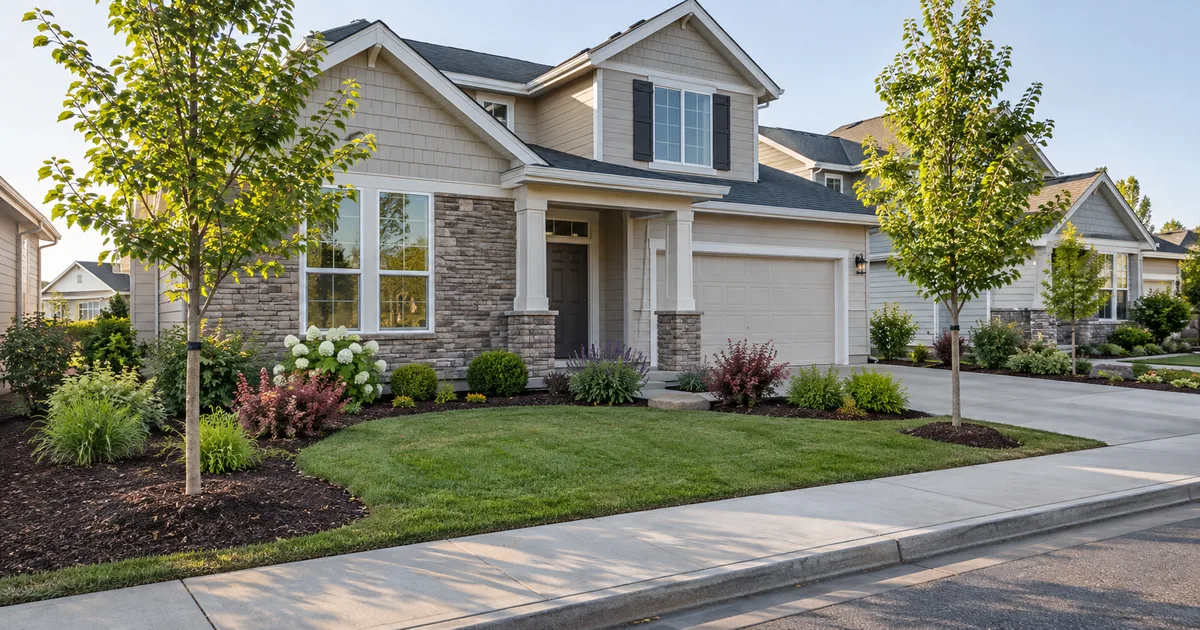
You close on a new house and step out the back door onto bare dirt.
Before you book a crew, find the HOA landscaping requirements in the recorded covenants and the design guidelines they refer to. Write down what starts the clock, what you need to plant, and who reviews the plan. Get written approval before you install, and check with your city or county for any separate landscaping deadline.
What do HOA landscaping requirements usually cover?
Start with the recorded declaration, often called the CC&Rs, short for covenants, conditions, and restrictions. Find the clause for initial landscaping, then pull the current design guidelines and any planting lists or exhibits it refers to. On a new build, the first question is whether the front, side, and back yards have different rules.
The strip between the sidewalk and curb may have its own instructions.
Look for minimum tree and shrub counts, plant sizes at installation, approved or prohibited species, and limits on how much ground can be lawn. Check how the rules treat mulch, rock, irrigation, and tree placement near property lines. Write down who has to approve the work and what the HOA counts as complete. If you see a final inspection or a request for completion photos on the form, put it on the calendar with the installation.
Separate installation from ongoing care. A builder might deliver a planted front yard while leaving you responsible for the back, or the HOA might maintain a strip you can’t redesign without permission. Before you start landscaping a new construction lot, compare the documents with what’s actually included on your lot. Ask the HOA to clarify any unclear boundary or requirement in writing.
How does an HOA landscaping deadline work?
Find the trigger in the clause. It could be closing or another event named in the documents, such as occupancy.
Then check whether the HOA landscaping deadline is a fixed number of days or a date that changes with the season. Ask which date applies if the builder moves your closing. Confirm whether the deadline is for finishing the work, passing an inspection, or both.
Suppose a hypothetical covenant gives you 105 calendar days if you close from March through August, and until the next June 14 if you close from September through February. Counting the day after closing as day one, you’d be due August 29 after a May 16 closing. Close October 17 and you’d have until June 14 of the next year. Use the counting rule in your own documents and get the date confirmed if there’s any ambiguity.
Work backward from the earlier of your completion deadline and the last suitable planting window. Allow for the installer’s lead time and the installation itself, then the HOA’s review time and a round of revisions. Ask when the review clock starts.
You can get bids while the plans are under review, using the same drawing and plant list for each bidder. When you’re deciding where to start on a new yard, ask your local Cooperative Extension about planting weather for the plants you’re specifying. If the timing won’t work, request an extension before the deadline. Give the reason and a proposed completion date, and keep the written decision.
Put the review deadline and the installation deadline on your calendar separately. A plan can be approved while the yard is still unfinished.
Check the permit file even if your lot has no HOA. West Valley City, Utah, requires a landscaping agreement at final inspection for single-family homes and ties its installation deadline to occupancy.
Ask your permit office whether your lot has any planting, inspection, or bond conditions and who must satisfy them. If both the permit and the HOA set deadlines for the same work, plan for the earlier one. Meet all applicable requirements and get any conflicts clarified before installation.
Check the rules before you buy
Ask for the recorded CC&Rs and amendments for your lot, the current design guidelines and approved plant list, the architectural review form, and the fine schedule. Ask who decides applications in that phase of the neighborhood. During build-out the developer, called the declarant in many documents, can still control the association or the review process. Check what the current rules allow and who has authority to grant a variance, even if a handover to residents is expected.
Price new construction HOA landscaping before you compare the house with a landscaped resale.
Get written estimates for the required trees, shrubs, ground cover, irrigation, and labor. Include site preparation if the scope calls for it. When you compare estimates, check for missing work in a landscaping quote, such as a plant list with no sizes or a price that leaves out irrigation.
If the builder offers a package, ask for the drawing, the plants and sizes, the areas it covers, and who secures approval and handles any city inspection. Check it against the requirements for your lot. Ask the builder whether the package can go into the purchase contract and the lender whether it can be financed with your loan.
If you’re hiring after closing, budget for the yard as an expense you’ll need to cover on the HOA’s schedule. If you can’t afford the required work or live with the yard the rules allow, decide that before you sign.
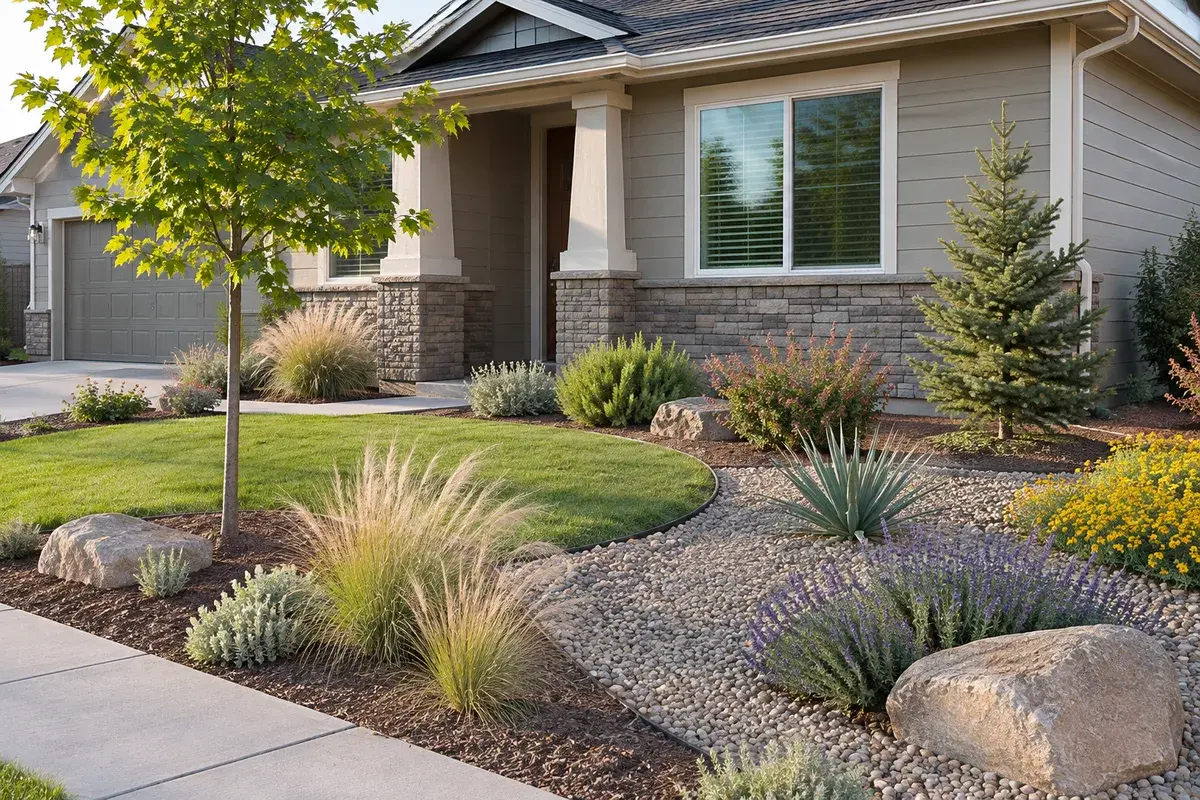
How do you get HOA landscape plan approval?
Start with the architectural review committee’s current application. The reviewers might be volunteers or get help from a design professional. Make it easy to check each requirement against the drawing.
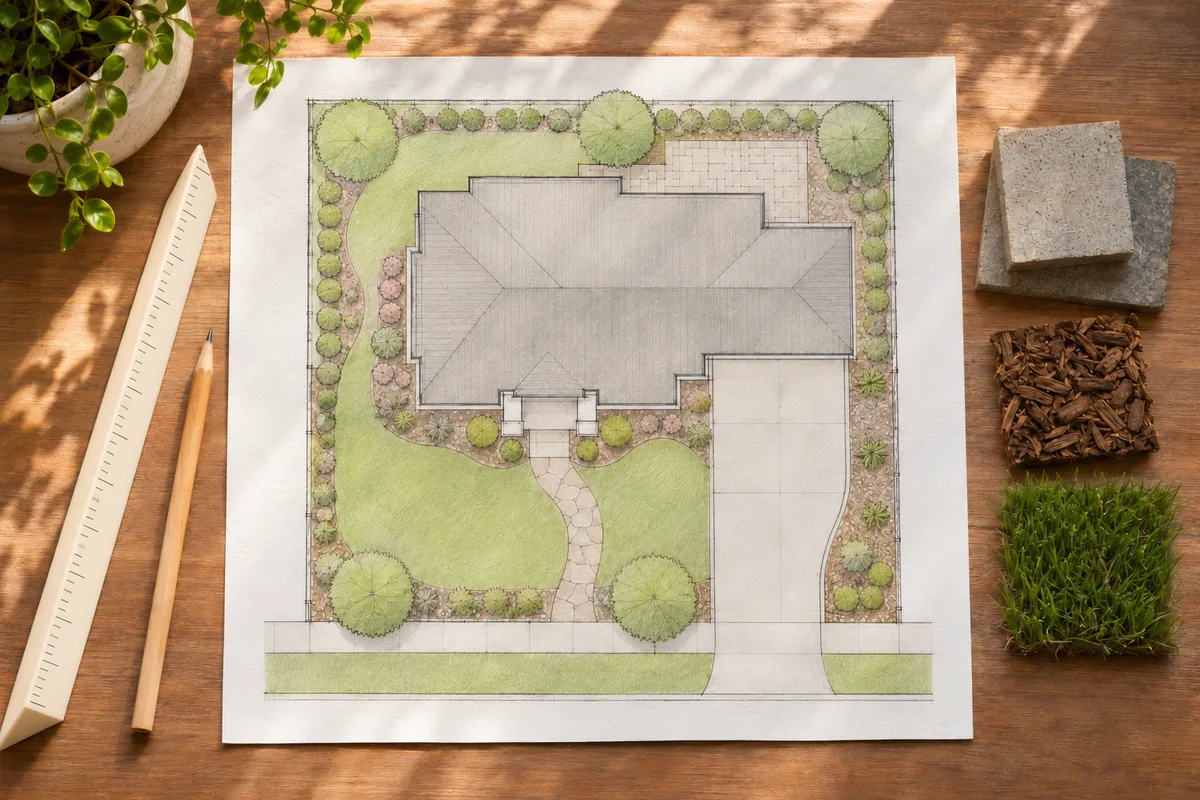
- Draw the site to scale. Show the house, lot lines, easements, setbacks, existing features to keep, and the dimensions of lawn, beds, walks, and patios.
- Key a plant list to the drawing. Give each species, quantity, and size at installation using the units the form asks for, such as container size, height, or trunk caliper.
- List turf area and its share of the area defined by the rule. Label surface materials and include irrigation details, existing and proposed grades, and the drainage route where the form requires them.
- Add any required photos, samples, and fees. Keep the submitted version and ask the HOA to confirm when it received a complete packet.
If you need a drawing, MyGardenGPT’s landscape design is a $299 one-time purchase that takes a property address or an aerial image and produces a landscape plan and contractor PDF. Check the drawing against your HOA’s rules and add whatever the review form asks for.
Say your hypothetical front yard has 1,750 square feet of area that the HOA counts and a 28% turf cap. Multiply 1,750 by 0.28 to get a maximum of 490 square feet. A 455-square-foot lawn is 26%.
If the same rules require 11 shrubs and allow five specified ornamental grasses to replace one shrub, eight shrubs and 15 eligible grasses meet that count. Check the size minimum for both plant types. Dimension every required tree setback and check the mature spread before you finalize the tree and hedge locations.
It’s easy to read a missed review deadline as permission to start. Treat silence as pending unless an applicable law or governing provision expressly makes it approval and you’ve verified that its conditions are met. For example, California Civil Code § 4765 requires a written decision when the governing documents require review of a covered change. If the decision is a denial, it must explain why and describe the board’s reconsideration procedure.
Give the crew the approved drawing and any conditions before work starts. If a plant is out of stock or the patio needs to move, check the change procedure and resubmit changes that require review before installing them.
When the nursery runs out of a specified plant, get the substitution cleared before the crew puts it in the ground.
Before anyone digs, including for trees or irrigation, coordinate with your installer to contact 811 and follow your state’s waiting and marking instructions. The service notifies participating utility operators. Private lines, such as irrigation or power to an outbuilding, may need a separate locate. When you inspect the finished work, use the approved plan to check plant counts, sizes, and materials before requesting any required HOA signoff.
Can an HOA require grass or block xeriscaping?
Check HOA xeriscape rules against the law for your state and property type. Protections for water-wise planting vary, especially if you’re choosing between living plants and artificial turf.
For covered detached single-family homes, Colorado’s C.R.S. § 38-33.3-106.5(1)(i.5) protects xeriscaping and backyard artificial turf. Ask the HOA for its preapproved front-yard designs. The HOA can still regulate plant and hardscape placement and protect drainage or fire buffers. Attached homes and condos fall outside this subsection.
For homes covered by Colorado’s C.R.S. § 37-60-126(11)(a.5), covenants requiring turfgrass as part of the planting are unenforceable. Separate rules in C.R.S. §§ 37-99-102 and 37-99-103 limit nonfunctional turf and nonfunctional artificial turf in covered new development and redevelopment, including on qualifying HOA common property.
In California, Civil Code § 4735 voids HOA provisions that ban or effectively prevent the use of low-water plants as a group, including in new plantings, or as a replacement for existing turf. The law also voids provisions that ban or effectively prevent the use of artificial turf or other synthetic surfaces that resemble grass. Under subsection (b), an HOA can still apply landscaping rules in its governing documents if those rules fully comply with subsection (a). Check city or county rules before choosing synthetic turf and follow the applicable review procedure.
In Texas, Property Code § 202.007 protects drought-resistant landscaping and water-conserving natural turf in covered associations. Your HOA can require a plan for aesthetic review and regulate materials such as gravel, but it can’t unreasonably deny or withhold approval for a protected installation. The section exempts associations that meet specific location and development criteria.
Florida Statutes §§ 720.3075(4) and 373.185 protect Florida-friendly landscaping on your land. The definition calls for water conservation, environmental protection, and plants suited to the site. Use those criteria when explaining how your plan qualifies. Check the HOA’s review requirements under Florida Statutes § 720.3035.
Laws can change. Check the current law and local rules for your property. This is not legal advice.
A planted front yard gives the street a finished appearance, and limiting irrigated turf can conserve water. You might also need a patch that can take daily soccer practice. Draw that space first and fit it inside the applicable turf cap.
If you need a firm route to the gate or a place to sit, price a permitted durable surface such as pavers and check what the hardscape and drainage rules allow. Use drought-resistant plantings in areas you rarely cross and choose a layout you can maintain over time. If the design needs an exception and the HOA offers variances, identify the clause, show the requested change on your plan, and wait for a written decision.
Before choosing plants or artificial turf, check which state and local rules apply to your property and what your HOA requires for review.
What if the HOA threatens fines, a lien or entry?
Read the notice and write down the response date, the rule it cites, and what the HOA wants you to fix. Check the governing documents and state law for notice, time to correct the issue, and hearing rights. These vary by state.
For example, Florida Statutes § 720.305(2) requires advance written notice of hearing rights and committee review before a covered HOA fine can be imposed. Respond in writing by the applicable deadline, request a hearing if available, and keep your proof of delivery.
Say the HOA wants to remove your patio after a neighbor’s contractor blames it for a leak. Ask for the declaration and plat provisions that show who maintains the area, the report or measurements the HOA relied on, and the authority it claims for entry, removal, charges, or a lien. A limited common element is an area held in common and set aside for the exclusive use of some units. If the declaration uses that term for your yard, read separately who handles routine upkeep, who repairs the drainage, and who can charge for the work.
If the HOA calls for patio removal, ask how the proposed work would change the water’s route.
Take dated photos or video from your property during rain or irrigation when it’s safe. Show where water enters, pools, and leaves. Gather the builder’s grading plan and any approvals for later changes.
Get quotes for an independent elevation survey if the dispute turns on where the ground rises or falls, or a licensed civil engineer with drainage experience if you need someone to assess where the water comes from and how it moves. Costs vary with the scope. Elevations show the grade, while assessing a leak can also require looking at downspouts, drains, or other sources of water.
Use the findings to evaluate drainage options for the yard. If the HOA threatens entry, demolition, a bill, or a lien, speak to a local HOA attorney before work starts and ask about preserving evidence and requesting a pause.
FAQ
How long do I have to landscape a new construction home?
Find the completion period, its trigger, and any seasonal exception in your HOA documents. Get the date confirmed using your actual closing or occupancy date, whichever applies. Ask the city or county about separate permit and inspection deadlines for your lot.
Do I need HOA approval for backyard landscaping?
Check what your governing documents and review form say about the backyard. A new bed, patio, or grading change can require approval even behind a fence. If you’re replacing sod with the same kind of grass, check for a maintenance exception before you prepare the soil for sod.
Does the builder have to include landscaping?
Check the purchase contract, lot specifications, and any municipal landscaping agreement. Ask which parts of the yard the builder will finish, when, and who will obtain approvals. Have the scope written into the contract before signing if the builder is doing the work.
Can an HOA charge me for fixing drainage?
It depends on the governing documents, applicable law, the area involved, and why the repair is needed. Ask for the provision that assigns repair responsibility and the basis for charging you, along with the proposed scope and itemized cost. Get local legal advice if the HOA plans to enter or says the bill can become a lien.